What If We Actually Had to Send a Spaceship to Save Humanity?
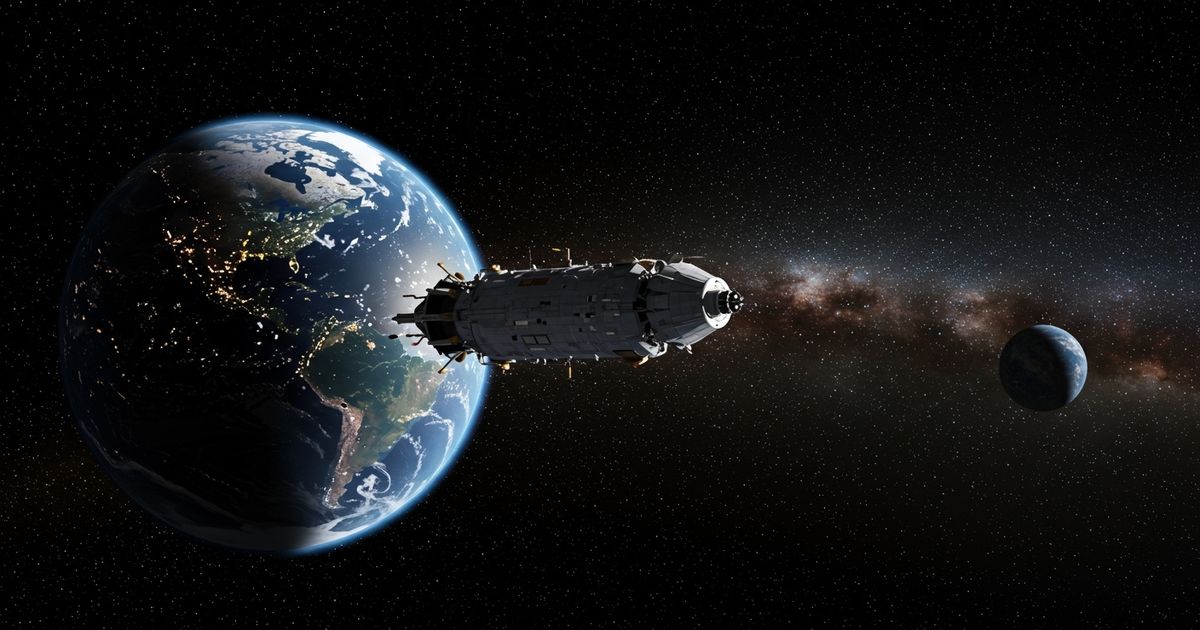
In the movie Project Hail Mary, a lone astronaut wakes up millions of miles from Earth with one mission: find a planet that can save our dying sun. It’s science fiction — but what if we actually had to do it? A team of real scientists just published a map of the best candidates.
And honestly? The list is more exciting than anything Hollywood dreamed up.
Why We’re Even Asking This Question
Let’s back up. Our galaxy — the Milky Way — contains hundreds of billions of stars. Many of those stars have planets orbiting them. And some of those planets might have the right conditions for life as we know it.
But “might” is doing a lot of heavy lifting there.
Think of it like apartment hunting. You can browse thousands of listings, but most of them are immediately disqualifying. Too hot. Too cold. No running water. Terrible neighborhood. Finding the right one takes serious filtering.
For decades, scientists have been doing exactly that — hunting for exoplanets, which just means planets outside our own solar system. They’ve confirmed over 5,500 of them so far. But most are completely hostile to life. Gas giants the size of Jupiter. Scorched rocks orbiting too close to their star. Frozen wastelands drifting too far away.
So what makes a planet actually livable?
The Goldilocks Problem (and Why It’s Complicated)
You’ve probably heard of the “habitable zone” — the region around a star where temperatures are just right for liquid water to exist on a planet’s surface. Not too hot, not too cold. The Goldilocks Zone.
But here’s the thing: being in the habitable zone is just the beginning. It’s like saying a restaurant is in a good neighborhood. That doesn’t tell you whether the food is good, whether the kitchen is clean, or whether you’ll get food poisoning.
A truly habitable planet needs a whole checklist of conditions. The right size — big enough to hold onto an atmosphere, but not so massive it becomes a crushing gas giant. A stable star that doesn’t blast the planet with deadly radiation every few years. Enough time for life to potentially get started.
That’s where this new research comes in.
The Atlas That Could Guide a Real Hail Mary Mission
A team of scientists has just published what they’re calling an atlas of potentially habitable planets. They didn’t just look at whether planets are in the habitable zone — they dug much deeper.
Their final list? 45 worlds worth serious attention.
To build this list, the researchers applied layer after layer of filters, like a coffee machine straining out the grounds to get to the good stuff. They looked at the size of each planet. They looked at the type of star it orbits. They considered how stable those stars are over long periods of time — because a star that throws out massive solar flares every few years is basically like living next to a neighbor who randomly sets off explosives. Not great for long-term survival.
One huge factor: the age of the star system. Life on Earth took billions of years to get from simple bacteria to complex creatures. In other words, you need a system that’s been around long enough to give life a fighting chance. A brand-new star system, cosmically speaking, might simply not have had enough time to cook.
So, Where Would We Actually Go?
The atlas highlights some genuinely tantalizing targets. Many of them orbit a type of star called a red dwarf — which is basically a smaller, cooler, dimmer version of our Sun. Think of our Sun as a roaring campfire. A red dwarf is more like a candle.
Red dwarfs are the most common type of star in the galaxy. And because they’re smaller, their habitable zones are much closer in. Planets orbiting red dwarfs can be much easier to spot and study with our telescopes.
But red dwarfs come with a catch. They’re prone to violent outbursts of radiation — huge flares that could strip away a planet’s atmosphere over time, like paint peeling off a wall in the sun. Whether life could survive on a planet orbiting a red dwarf is one of the biggest open questions in astronomy right now.
Some of the most exciting candidates in the new atlas orbit more Sun-like stars — steadier, calmer, and already proven (by our own existence) to support life. These planets are harder to detect, but if they check all the boxes, they’re incredibly compelling.
The closest candidates on the list are still jaw-droppingly far away. Even the nearest ones are several light-years from Earth. To put that in perspective: our fastest spacecraft today would take tens of thousands of years to reach even the closest star. That’s not a typo.
In Project Hail Mary, they solve this problem with fictional technology. In reality, we’re still working on it.
Why This Actually Matters Right Now
You might be thinking — if we can’t travel there, why bother making a list?
Great question. Here’s why it matters enormously, even today.
First, we don’t need to go somewhere to study it. Our telescopes — especially the James Webb Space Telescope, which launched in 2021 — can analyze the light passing through a planet’s atmosphere from here on Earth. Think of it like smelling what’s cooking in a restaurant before you walk in. Certain chemicals in the atmosphere, like oxygen or methane, could be signs of life.
Having a focused target list means scientists know exactly where to point their telescopes. Without a shortlist, it’s like trying to find a specific person in a crowd of billions with no description. With the atlas, we have faces to look for.
Second, this research pushes forward our understanding of what “habitable” actually means. Every time scientists refine the criteria, we learn something new about our own planet — and why it’s so remarkably suited for life.
And third — yes, let’s say it — if humanity ever faces a Project Hail Mary scenario, this list is where we’d start.
What Comes Next
This atlas isn’t the final answer. It’s more like the first serious draft.
As our telescopes improve, scientists will be able to study the atmospheres of these 45 candidates in much greater detail. We may rule some out entirely. We may find one that sets off every alarm bell in the best possible way.
There are also ongoing missions in the works — space telescopes designed specifically to image Earth-like planets around nearby stars. These could, within the next few decades, give us our first real look at whether any of these worlds have the ingredients for life.
And beyond the science, there’s something almost philosophical about this research. We are, for the first time in human history, building a serious, evidence-based list of places where life might exist beyond Earth.
That’s not science fiction anymore. That’s a research paper with citations.
The universe is vast beyond anything our brains are really wired to comprehend. But somewhere in that vastness, one of those 45 planets might have something extraordinary waiting to be discovered.
Maybe we’ll find it with a telescope. Maybe, one day, something braver than a telescope.