Are We Really Alone? These 45 Worlds Might Have the Answer
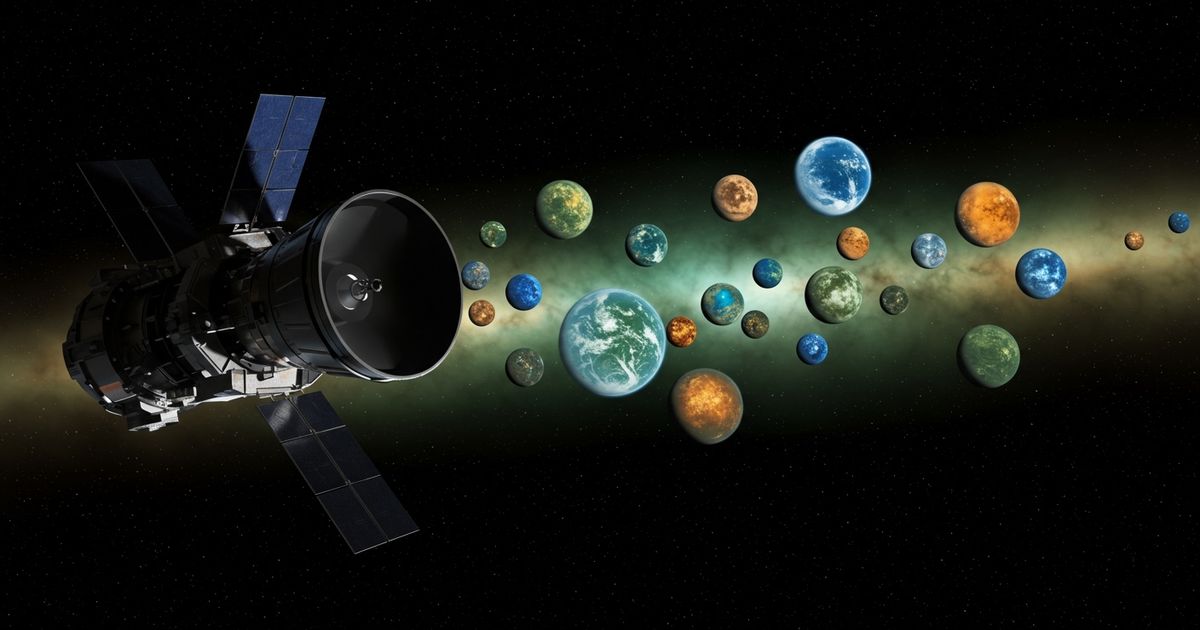
Somewhere out there, on a rocky planet orbiting a distant star, something might be breathing. It sounds like science fiction. But a team of scientists just handed astronomers a shortlist — 45 worlds that could be the best places in the galaxy to search for life beyond Earth.
That’s not a rumor. That’s a new scientific catalog, and it might quietly be one of the most important documents in human history.
The Universe Is Enormous — and That’s a Problem
Here’s the thing about searching for alien life: you can’t just point a telescope at random and hope for the best. The Milky Way alone contains somewhere between 100 and 400 billion stars. Many of those stars have planets. That’s an almost incomprehensible number of worlds to sift through.
Think of it like trying to find the one restaurant in your city that serves the exact meal you’re craving — except the city has billions of restaurants, most have no menu posted outside, and you can only check a few dozen per year.
That’s the situation astronomers have been in. So scientists have been working to build smarter shortlists — catalogs that narrow the search based on what we know about life and where it tends to thrive.
This new catalog is the latest and most refined attempt at doing exactly that.
What Makes a Planet “Possibly Habitable”?
Before we get to the 45 candidates, we need to talk about what scientists are actually looking for. And it starts with water.
As far as we know, every living thing on Earth needs liquid water to survive. Not ice. Not steam. Liquid. That means the temperature on a planet has to sit in a pretty specific sweet spot — not too hot, not too cold.
Astronomers call this region around a star the habitable zone. But a cozier name for it is the “Goldilocks zone.” Too close to the star, and your water boils away. Too far, and it freezes solid. Right in the middle, and you’ve got the conditions for liquid water — and maybe life.
But being in the habitable zone is just the starting requirement. It’s like saying a house is in a good neighborhood. It doesn’t mean the house itself is livable. The planet also needs to be roughly the right size. Too small and it can’t hold onto an atmosphere — that thin blanket of gas that protects life and keeps temperatures stable, like Earth’s. Too large and it might be a crushing gas giant with no solid surface to stand on.
The 45 planets in this new catalog tick both of those boxes. They sit in the habitable zone of their star and they’re rocky, Earth-like worlds — not bloated gas balls like Jupiter.
Meet the Shortlist
Researchers combed through thousands of known exoplanets — that’s the term for planets orbiting stars other than our Sun — and applied a rigorous set of filters to identify the most promising candidates.
The result? Forty-five worlds that deserve a much closer look.
These aren’t randomly scattered across the galaxy. Several of them orbit stars called red dwarfs. Red dwarfs are smaller, cooler, and dimmer than our Sun — more like a campfire compared to a bonfire. Because they’re so common (they make up about 70% of all stars in the Milky Way) and because their habitable zones are relatively close in, they’ve become a major target for life searches.
Think of it like this: if you’re hunting for a specific type of flower, you’d search in the climate where it grows most often. Red dwarf systems are that climate for rocky, potentially habitable planets.
Some of the 45 planets are particularly exciting because they orbit in what scientists call the “optimistic” habitable zone — a slightly wider sweet spot that accounts for the possibility that life might survive in conditions a little harsher than Earth’s. In other words, we’re not just looking for Earth’s twin. We’re open to cousins.
Why This Catalog Changes the Game
Here’s where this gets really significant. We’re entering a golden age of space telescopes. The James Webb Space Telescope — essentially a school-bus-sized eye in space that can see further and in more detail than anything before it — is already operational and pointing at distant worlds.
But here’s the catch: telescope time is extremely limited. Scientists around the world compete fiercely to use it. You can’t study thousands of planets with it. You need a shortlist.
That’s exactly what this catalog provides.
By narrowing the field to 45 high-priority candidates, astronomers now have a focused target list for future observations. The goal will be to analyze the atmospheres of these worlds — essentially sniffing the air from light-years away.
How? When a planet passes in front of its star, a tiny amount of starlight filters through the planet’s atmosphere. Different gases absorb light in different, distinctive ways — like chemical fingerprints. If scientists detect the right combination of gases — oxygen, methane, carbon dioxide in certain proportions — it could be a sign of biological activity. Life, in other words.
Basically, we’re looking for planets that might be exhaling.
What Happens If We Actually Find Something?
Let’s dream for a second.
If even one of these 45 planets shows an atmospheric fingerprint that biology could explain — something that non-living chemistry simply wouldn’t produce on its own — it would be the single most profound discovery in the history of science. Bar none.
It wouldn’t mean little green men. It would probably mean microbial life — something more like bacteria than anything you’d see in a movie. But that would still completely rewrite our understanding of our place in the universe.
Right now, we have a sample size of one. One planet with life: Earth. We have no idea if life is common or extraordinarily rare. Finding even a hint of it elsewhere would tell us that the universe is, in a very real sense, alive.
The Search Is Just Getting Started
Of course, this is science — which means there are no guarantees, and every answer tends to generate ten new questions.
Even with this shortlist, studying these planets is extraordinarily difficult. Most of them are dozens to hundreds of light-years away. One light-year is about 9.5 trillion kilometers — or roughly 63,000 times the distance from Earth to the Sun. We’re not visiting these places anytime soon.
And there’s still so much we don’t know. Could life exist without liquid water? Could it survive under a thick blanket of ice, like on some of Jupiter’s moons? Could it thrive on a planet with a chemistry completely unlike Earth’s? The catalog is built on what we know — but the universe has surprised us before.
Still, there’s something deeply exciting about the moment we’re in. Forty-five worlds. Real places, orbiting real stars. And for the first time in history, we actually have the tools to start asking whether they’re inhabited.
The shortlist is ready. The telescopes are waiting. The question — the oldest question humanity has ever asked — might finally be approaching an answer.