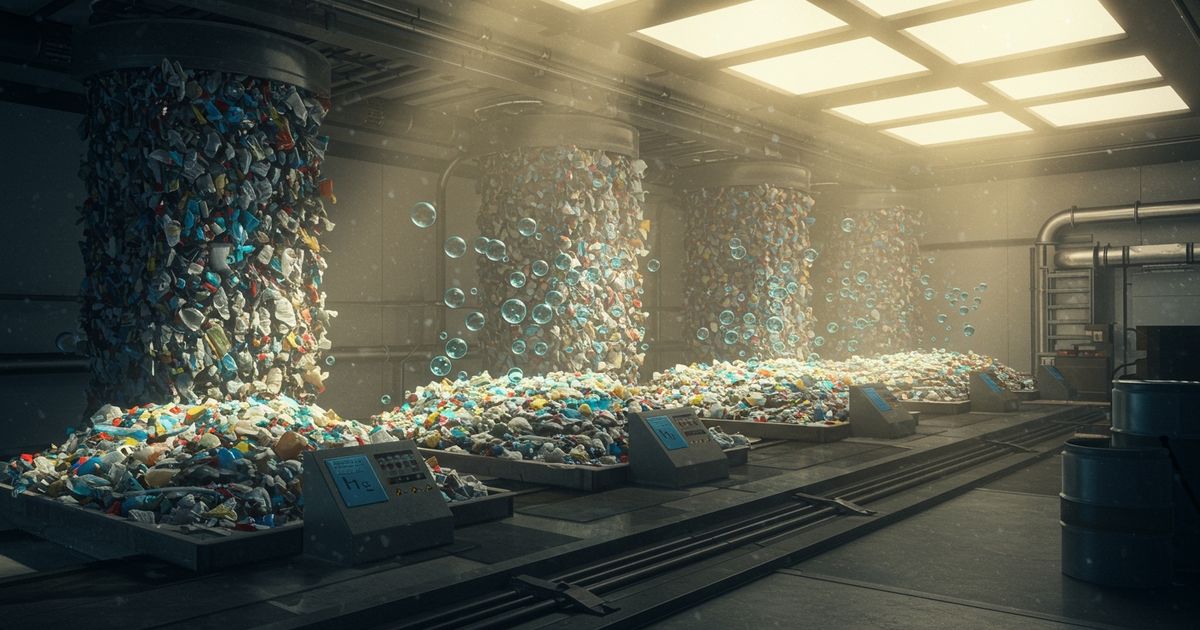
Have you ever looked at a plastic bottle floating in the ocean or a mountain of trash in a landfill and wondered if there’s any good that could come from it? Or maybe you’ve heard about clean energy, like hydrogen, but worried about how we’d ever produce enough without harming the planet. What if I told you that scientists are now figuring out a way to tackle both these giant problems at once, using nothing but sunlight?
Background
Let’s start with the not-so-fun stuff: plastic. We’re drowning in it. From the packaging around our food to the clothes we wear, plastic is everywhere. And while it’s incredibly useful, it’s also a huge problem. Most of it isn’t recycled, and it takes hundreds of years to break down, polluting our land, rivers, and oceans. Think of it like a guest who stays way, way too long and makes a huge mess – indefinitely.
At the same time, we desperately need cleaner ways to power our world. Our current energy sources, like burning fossil fuels, release gases that are warming our planet. So, scientists are constantly searching for alternatives. One of the most promising is hydrogen. When you burn hydrogen for energy, it only produces water vapor – no smog, no greenhouse gases. It’s like the ultimate clean-burning fuel, leaving zero mess behind. The big challenge, though, is how to get hydrogen in a way that’s also clean and affordable. Historically, producing hydrogen often uses a lot of energy itself, sometimes from fossil fuels, which defeats the purpose.
So, on one side, we have a mountain of unwanted plastic. On the other, we have a huge need for clean hydrogen fuel. For a long time, these two problems seemed completely separate. Plastic was trash, and hydrogen was a tricky fuel to make cleanly. But what if we could connect them?
Discovery
That’s exactly what a brilliant team of scientists set out to do. They’ve found a way to take plastic waste and, with the help of ordinary sunlight, transform it into hydrogen fuel. It sounds like something out of a futuristic movie, doesn’t it? But it’s real science, happening right now in labs.
Think of plastic as a super-complex chemical structure, made up of lots of smaller building blocks all hooked together. Imagine it’s like a giant LEGO castle. What these scientists did was find a special “key” that, when hit by sunlight, can unlock those LEGO bricks and rearrange them into something new and valuable: hydrogen.
The “key” they found is a special type of material called a photocatalyst. Let’s break that down. “Photo” means light, and “catalyst” is basically a helper. So, a photocatalyst is a light-activated helper chemical. Imagine you’re baking a cake. A catalyst is like a special ingredient that speeds up the baking process without actually being consumed in the cake itself. In this case, the photocatalyst doesn’t get used up; it just helps the reaction along.
Here’s how it works: First, you take plastic waste – the stuff we usually throw away – and mix it with water. Then, you add a tiny amount of this special photocatalyst. This mixture is then exposed to sunlight. When the sunlight hits the photocatalyst, it gets energized. It’s like the photocatalyst absorbs the sun’s energy and gets a little “jolt.”
This energy is then passed on to the plastic molecules. In other words, the sunlight, through the photocatalyst, provides the kick needed to break the strong chemical bonds holding the plastic together. As the plastic breaks apart, it releases hydrogen atoms. These atoms then combine to form hydrogen gas – our clean fuel! It’s like magic, turning trash into treasure, powered by the sun. The remaining bits of plastic material are also broken down into simpler, less harmful components, or can even be used for other industrial purposes.
The process is remarkably elegant because it uses something abundant (sunlight) and something problematic (plastic waste) to create something incredibly valuable (clean fuel). Instead of burning plastic, which releases harmful fumes, or letting it sit in a landfill for centuries, this method completely reconfigures it. It’s a fundamental shift in how we view plastic – not as an endpoint for trash, but as a starting point for energy.
Significance
This discovery is a huge deal because it tackles two of the world’s most pressing challenges simultaneously. First, it offers a novel way to deal with the overwhelming plastic pollution crisis. Instead of just burying it or shipping it away, we could potentially transform it into something useful. Think of it like getting a free fuel source from your discarded yogurt containers and plastic bags.
Second, it provides a brand-new pathway to produce clean hydrogen fuel. Right now, most hydrogen production methods are either expensive or still rely on fossil fuels. This new approach harnesses sunlight, which is free and abundant, and uses waste material as its raw ingredient. This could drastically lower the environmental footprint of hydrogen production and make it a truly sustainable energy source.
Basically, this research moves us closer to what scientists call a “circular economy.” Instead of a one-way street where we make, use, and then throw away plastic, we could create a loop where plastic waste becomes a valuable resource for making energy. It’s like recycling on a whole new level, giving plastic a second life as fuel for cars, homes, or even entire industries.
Outlook
While this research is incredibly exciting, it’s important to remember that it’s still in its early stages. Think of it like a brand-new recipe that a chef has perfected in a small kitchen – it works, and it tastes great, but now they need to figure out how to make it for thousands of people every day.
Scientists are now working on making the process even more efficient. How much hydrogen can we get from a kilogram of plastic? How quickly can it happen? They also need to figure out how to scale this up from a lab experiment to an industrial process that can handle the massive amounts of plastic waste we produce. They’re exploring different types of photocatalysts and figuring out how they react with the many different kinds of plastics out there.
But imagine the possibilities! Picture a future where plastic recycling centers aren’t just sorting facilities, but also mini hydrogen power plants. Instead of just sending your plastic to be melted down into another plastic item (which often can only happen a few times), it could be directly converted into fuel for your car or electricity for your home. It’s a world with less plastic cluttering our environment and more clean energy flowing through our grids. This groundbreaking research sparks hope for a future where our trash isn’t just a problem, but a powerful solution.