The Universe Just Broke Its Own Rules
What’s the difference between a planet and a star? You might think that’s a settled question — but astronomers just discovered an object in space that doesn’t fit neatly into either category. And it’s forcing scientists to redraw one of the most fundamental lines in astronomy.
Two Ways to Build a World
Before we get to the weird stuff, let’s talk about how planets and stars are born — because they’re made completely differently.
Stars form from the top down. Imagine a massive cloud of gas slowly collapsing under its own gravity, like a giant invisible hand squeezing a fog bank into a dense, hot ball. Eventually it gets so hot and compressed that nuclear reactions ignite — and boom, you have a star.
Planets work the other way around. They’re built bottom up, like constructing a skyscraper one brick at a time. Tiny grains of rock and ice floating in space bump into each other, stick together, and slowly snowball into something bigger and bigger over millions of years. That’s how Earth formed. That’s how Jupiter formed.
But here’s where things get interesting: the bigger the planet, the harder it is to explain how this brick-by-brick process could have pulled it off. At some point, the recipe just seems to break down.
So where exactly is the limit? How massive can a “planet” get before it had to have formed a different way — the star way?
That’s the question scientists have been wrestling with for decades. And thanks to NASA’s James Webb Space Telescope, they just got a surprising answer.
Meet the Object That Broke the Rules
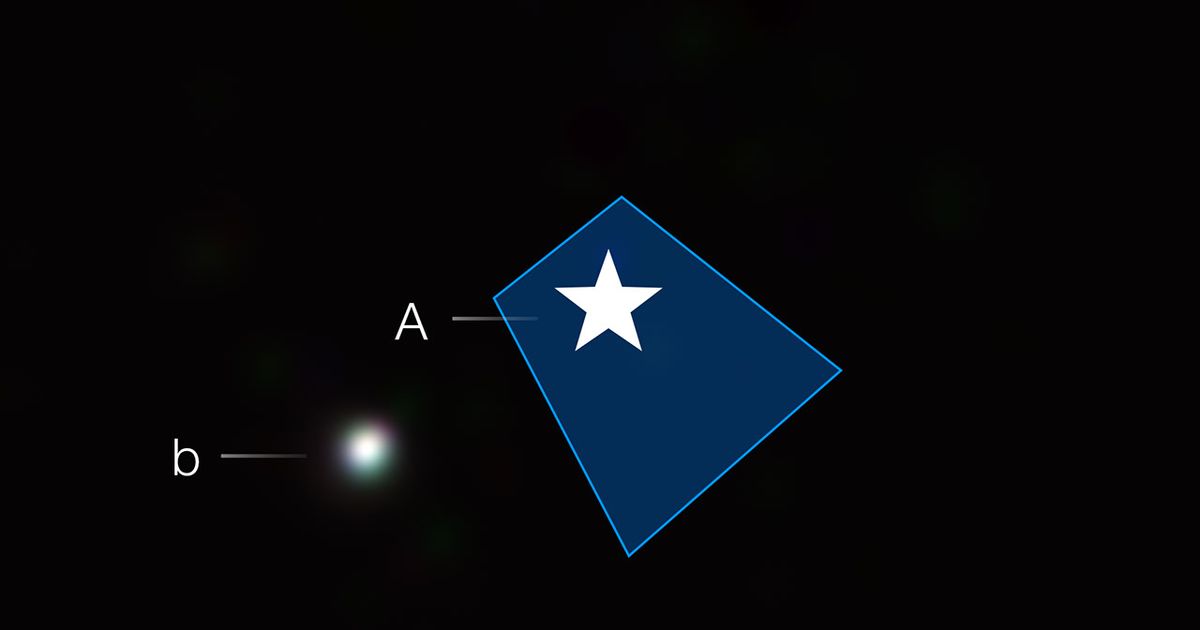
The object in question is called 29 Cygni b. It orbits a star in the constellation Cygnus — the Swan — about 130 light-years away. One light-year is roughly 6 trillion miles, so we’re talking very far away.
29 Cygni b is a giant. It’s somewhere between 7 and 10 times the mass of Jupiter, which is itself so large that more than 1,300 Earths could fit inside it. By the time you’re stacking that many Jupiters together, most astronomers would expect the object to have formed star-style — collapsing from a gas cloud rather than being built up piece by piece.
But the Webb telescope revealed something unexpected.
The telescope analyzed the chemistry of 29 Cygni b by studying the light coming from it. Think of it like this: every element and molecule absorbs and emits light in its own unique way, like a fingerprint. By reading those fingerprints in the light from 29 Cygni b, scientists could figure out what it’s actually made of.
And what they found looked planetary. The object’s composition matched what you’d expect from something built bottom-up, not top-down.
In other words, this monster of a world — way bigger than anything in our solar system — appears to have formed the same way Earth and Jupiter did. That was not supposed to be possible.
Why This Rewrites the Rulebook
For a long time, astronomers drew the dividing line at around 13 Jupiter masses. Objects below that were called planets (or planet-like things). Objects above that were called brown dwarfs — basically failed stars, objects too small to ignite nuclear fusion but formed the same way stars are.
Think of it like the difference between a campfire and a bonfire. They’re both fire, but one is much more intense and forms under different conditions. Brown dwarfs were supposed to be the “bonfire” version — bigger, hotter, and born from collapsing gas clouds.
But 29 Cygni b sits right in that borderland, and its chemistry is saying: “Actually, I was built like a planet.”
This means the old dividing line wasn’t based on the right criteria. Mass alone doesn’t tell you how something formed. It’s like assuming every tall building must be built with steel frames — until you find a skyscraper made of concrete that’s just as tall. The size doesn’t determine the construction method.
What really matters, scientists now believe, is how the object formed — and Webb is giving us the tools to actually check that, for the first time.
Why Webb Can Do What No Other Telescope Could
The James Webb Space Telescope is the most powerful space telescope ever built. It sees the universe in infrared light — basically heat signatures invisible to human eyes. This lets it peer through dust clouds and analyze the chemistry of distant worlds with incredible precision.
Before Webb, we could spot these massive objects but couldn’t really “read” them up close. It’s like being able to see a distant bookshelf but not make out the titles. Webb gives us the ability to actually read the spines of the books.
That’s why this discovery was possible now and not ten years ago.
What This Means for Our Place in the Universe
This isn’t just a nerdy reclassification. It changes how we think about what a “planet” even is.
If giant planetary objects can form through the same brick-by-brick process as Earth — just taken to an extreme — then the universe might be filled with planet-like worlds far more massive than we ever thought possible. And if planets can grow that large, it raises fascinating new questions about what might exist on or around them.
It also means we may have been misidentifying objects for years. Some things we called “failed stars” might actually be super-sized planets. The universe, as usual, turns out to be weirder and more varied than our tidy categories suggest.
Basically, we thought we had a clear rule: big things form one way, small things form another. Turns out the universe didn’t get the memo.
What Comes Next
Scientists now plan to study more objects like 29 Cygni b — those that sit in the murky zone between planets and brown dwarfs — to see how many others have planetary chemistry hiding in a giant’s body.
Each discovery chips away at the old boundaries and forces us to build better ones. That’s how science works. You draw a line, the universe crosses it, and you draw a better line.
The bigger question this leaves us with is almost philosophical: what is a planet, really? Is it about size? Chemistry? How it was born? Where it sits in a solar system?
We’ve been arguing about that since Pluto got demoted back in 2006. Turns out, we still don’t have the full answer — and objects like 29 Cygni b are making sure we keep asking.
The universe is under no obligation to stay inside the boxes we build for it. And honestly? That’s what makes it so endlessly fascinating.