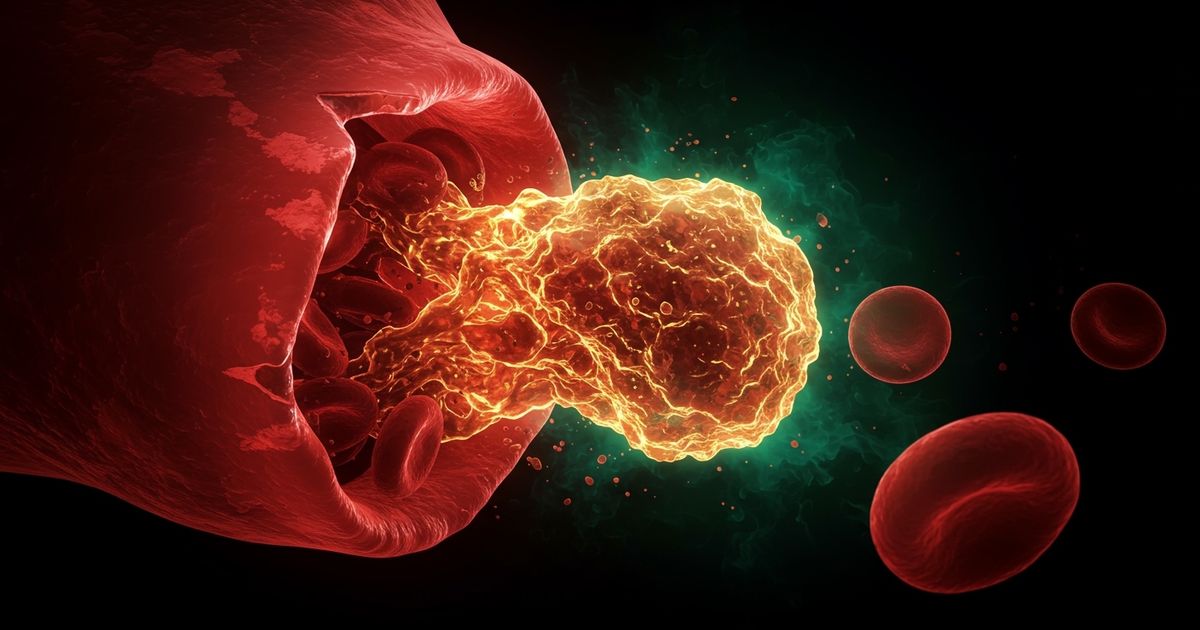
Have you ever sliced your finger cooking, or scraped your knee falling off a bike? Our bodies have an amazing ability to stop bleeding all on their own. But what if that injury is really severe? What if it’s an accident where every second counts?
For too long, severe bleeding has been a race against time, often with tragic consequences. Blood loss is a leading cause of death in emergencies, from battlefields to car accidents. It’s a problem that current medical solutions, while helpful, often can’t solve fast enough or well enough. But now, scientists have created something truly revolutionary: “smart” blood cells that can stop bleeding almost instantly and then, remarkably, help the body heal itself.
Background
Let’s talk about what happens when you get a cut. Your body has a built-in emergency response system. First, tiny cell fragments called platelets rush to the injury site. Think of them as little construction workers. They stick together and form a temporary plug. Then, a protein called fibrin — which acts like microscopic strands of superglue — arrives and weaves itself into a net over these platelets. This net traps more blood cells and forms a sturdy clot, like a dam stopping a leak, eventually turning into a scab. This natural process is usually enough for small cuts.
However, for major injuries, like a deep wound from a car crash or during complex surgery, this natural process can be too slow or not strong enough. Too much blood can be lost before the clot can fully form. This is where medical professionals step in, using pressure, special bandages, or sometimes even tourniquets. There are also “hemostatic agents” — basically, fancy substances that help blood clot faster. But even these often take a little time to work, and they usually just stop the bleeding; they don’t actively help the wound repair itself afterward.
This left a big challenge for scientists: how do we make the body’s natural clotting process super-fast, super-strong, and super-smart, so it doesn’t just stop bleeding but also kicks off the healing?
Discovery
Enter the incredibly clever solution from researchers: engineered red blood cells. You know red blood cells as the oxygen carriers of your body, giving blood its distinctive color. Normally, they don’t do much in terms of clotting. But what if they could?
Scientists have essentially given these ordinary red blood cells a powerful upgrade. Think of it like equipping a regular delivery truck with a special, high-tech emergency repair kit and a team of rapid construction workers. They modified these red blood cells by adding specific molecules to their surface. These molecules act like microscopic hooks and signals.
Here’s how it works: When these modified red blood cells encounter an injury site – basically, anywhere blood is leaking out – those special surface molecules activate. They do two incredible things almost simultaneously.
First, they make the red blood cells immediately stick together, not just to each other, but also to the damaged tissue around the wound. Imagine countless tiny magnets suddenly switching on and pulling everything together to form a tight seal. This creates a powerful, physical barrier that stops the blood flow. We’re talking seconds, not minutes. This initial plug is incredibly strong, much tougher than a regular clot, which means it can withstand more pressure and hold its own against rapid blood flow.
Second, and this is where it gets truly groundbreaking, these engineered cells don’t just act as a super-fast plug. They also release signals that tell the body, “Hey, emergency over, but now it’s time to rebuild!” These signals actively recruit the body’s own repair mechanisms. In other words, they don’t just stop the leak; they also jumpstart the healing process. They encourage new tissue growth and help the wound close up properly, leading to much faster and more complete regeneration. Think of it like a smart patch that not only seals a hole but also contains seeds that immediately start growing new material to repair the damaged area.
This dual action — instant, strong clotting and active tissue regeneration — is what sets this discovery apart. It’s not just patching a problem; it’s initiating a full-scale repair from the moment the damage occurs.
Significance
This breakthrough could change the game in emergency medicine and beyond. Imagine a soldier on the battlefield, or a victim of a severe car accident. Every precious second lost to blood loss significantly decreases their chance of survival. With these engineered blood clots, medical responders could potentially halt life-threatening bleeding almost immediately, drastically improving survival rates.
In the operating room, surgeons often face challenges with blood loss during complex procedures. Using these smart blood cells could mean less bleeding during surgery, shorter operation times, and fewer blood transfusions needed for patients. For patients, this translates to faster recovery, fewer complications, and a quicker return to their normal lives.
And it’s not just about trauma. People with certain medical conditions, like hemophilia (where blood doesn’t clot properly), or those taking blood-thinning medications, are at a higher risk of severe bleeding from even minor injuries. This new technology could offer them an unprecedented level of protection and peace of mind. Basically, it moves us from simply reacting to bleeding to proactively commanding the body’s repair systems with incredible precision and speed.
Outlook
While this research is still in its early stages, the possibilities are incredibly exciting. The next big steps will involve rigorous testing to ensure these engineered blood cells are not only effective but also completely safe for humans. Scientists will need to conduct clinical trials, essentially testing them in real-world situations with patients, to fine-tune the treatment and understand any long-term effects.
Looking further ahead, this technology could open doors to even more innovative medical applications. Could these smart cells be used to deliver specific medications directly to injured tissues? Could they be stored for emergencies, ready to be deployed instantly? Could we adapt this approach to target other kinds of internal damage or disease?
The journey from a laboratory discovery to a widely available treatment is long and complex. But this discovery gives us a glimpse into a future where severe bleeding might no longer be a death sentence, and where our own bodies, with a little scientific ingenuity, become the ultimate healers. It’s a testament to how understanding and gently tweaking nature’s own designs can lead to solutions that could save countless lives and profoundly change how we approach injury and healing.