We’re Going Back to the Moon — And This Time, We’re Staying
The last time a human being stood on the Moon, it was 1972. That’s older than the internet, older than the VCR, and older than most of your parents. But that long wait is finally coming to an end.
NASA’s Artemis program just pulled off something remarkable with its Artemis 2 mission — sending astronauts on a loop around the Moon for the first time in over half a century. And NASA isn’t stopping there. Not even close. The agency has a whole roadmap of missions planned, each one building on the last like floors of a skyscraper reaching toward the stars.
So what exactly comes next? Buckle up, because humanity’s return to the Moon is just getting started.
Why Go Back at All?
Fair question. We already went to the Moon six times between 1969 and 1972. We planted flags, collected rocks, hit a golf ball. Done, right?
Not quite.
Think of those Apollo missions like a road trip where you pulled off at a rest stop, snapped a few photos, and drove home. What NASA wants to do now is actually move in. The goal of the Artemis program is to build a long-term human presence on and around the Moon — not just visit, but stay, work, and learn.
And here’s the exciting part: the Moon isn’t just a destination. It’s a practice run. Everything we learn about living and working on the Moon helps us prepare for the ultimate challenge — sending humans to Mars. The Moon is basically our training ground, sitting just three days away by spacecraft. Mars, by comparison, is a six-to-nine month journey. Getting the Moon right is everything.
There’s also the matter of what’s on the Moon. Scientists believe the Moon’s south pole — a region humans have never visited — is hiding something incredible: water ice, frozen in permanently shadowed craters that never see sunlight. Water means drinking. Water means oxygen to breathe. Water means hydrogen for rocket fuel. In other words, it could be the key to making deep space exploration actually sustainable.
The Next Giant Leap: Artemis 3
Artemis 2 was a dress rehearsal — humans in the spacecraft, orbiting the Moon, but not landing. Artemis 3 is the real deal.
This mission will put boots on the lunar surface for the first time since Apollo 17 in 1972. And in a historic first, it will include the first woman and the first person of color to walk on the Moon.
But this isn’t your grandfather’s Moon landing. Artemis 3 isn’t heading for the flat, sunlit plains near the equator where Apollo touched down. It’s going to the south pole — that mysterious, shadowy region where the water ice is believed to be hiding.
Here’s where it gets really cool. To land on the Moon, NASA is teaming up with SpaceX, the private rocket company led by Elon Musk. SpaceX has built a special version of its massive Starship rocket — imagine a 16-story silver skyscraper designed to touch down on another world — that will act as a lunar lander. The Artemis astronauts will travel to the Moon aboard NASA’s Orion capsule, then transfer to the Starship lander to descend to the surface.
Think of it like a cruise ship dropping anchor offshore while passengers take a smaller boat to the beach. The Orion is the cruise ship. The Starship is the little boat.
Once on the surface, astronauts will have about a week to explore, collect samples, and conduct science experiments. They’ll be looking for that water ice, studying the weird behavior of lunar dust (which is notoriously sharp and clingy — like ultra-fine broken glass that sticks to everything), and testing equipment that future missions will depend on.
Building a Base Camp: Artemis 4 and Beyond
If Artemis 3 is moving in, Artemis 4 is buying the furniture.
This mission is planned to begin construction of the Gateway — a small space station that will orbit the Moon. Think of the Gateway as a waypoint, like a bus station in space. Astronauts will dock there on their way to and from the lunar surface. Over time, it’ll become a place to live, work, and stage missions.
The Gateway won’t be big — picture an apartment-sized structure floating in space, not a massive complex — but it’s a crucial first step toward having a permanent human foothold in the lunar system.
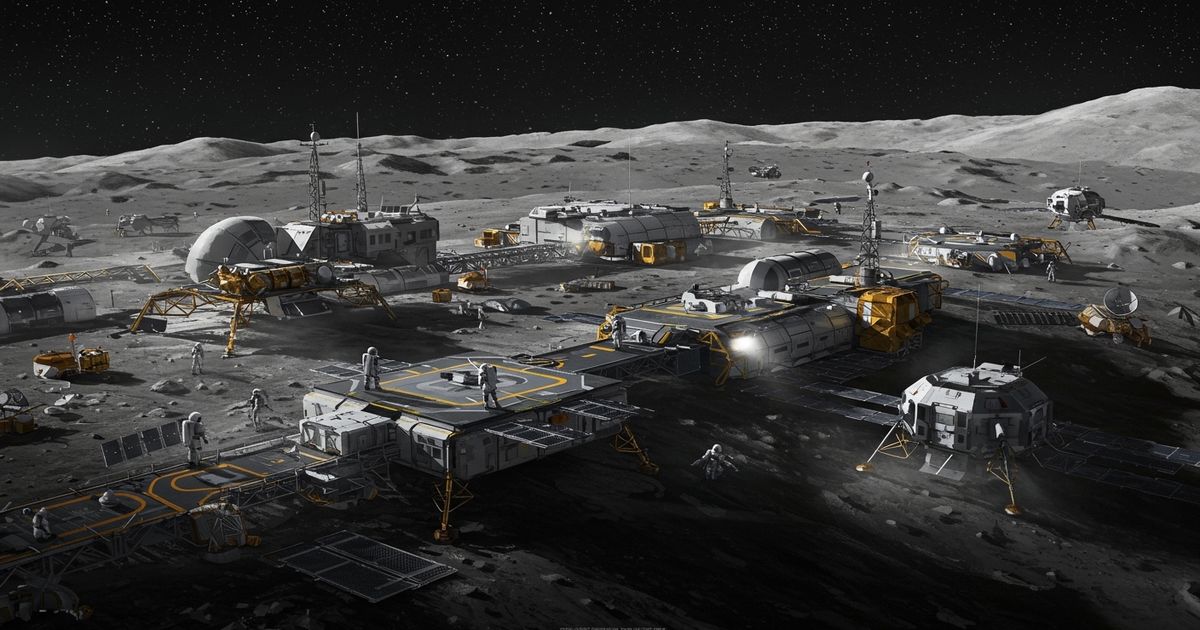
Artemis 5 and subsequent missions would then continue adding pieces to the Gateway while also expanding surface operations. The long-term vision involves a base camp on the Moon’s surface itself — somewhere astronauts could stay for weeks or months at a time, not just a few days.
Basically, NASA is planning to turn the Moon from a day trip into a second home.
Why This Changes Everything
Here’s why this matters beyond the wow factor.
Every single thing we figure out on the Moon — how to grow food, recycle water, generate power, protect humans from radiation — feeds directly into our ability to survive on Mars. The Moon is close enough that if something goes wrong, you can get astronauts home in a few days. On Mars, there’s no rescue mission coming. We need to get this right first.
There’s also the science. The Moon is like a time capsule. Because it has no atmosphere and no tectonic activity (no shifting plates, no volcanoes rewriting history), its surface preserves a record of the early solar system going back billions of years. The rocks and ice at the south pole could tell us things about how the Moon — and Earth — formed. The ice itself might even contain ancient cometary material, little frozen messengers from the early days of the solar system.
And let’s not ignore the bigger picture: this is a global effort. NASA is working with partner agencies from Europe, Japan, Canada, and beyond. The Artemis Accords — a set of agreements about peaceful and transparent space exploration — have been signed by dozens of countries. The Moon is becoming a place where humanity as a whole is making its next move.
What Comes Next (And What We Still Don’t Know)
The road ahead is genuinely thrilling — but it’s not without bumps.
Timelines in space exploration have a long history of slipping. Artemis 2 itself was delayed multiple times before its success. Artemis 3 could face similar hurdles, whether from technical challenges, budget pressures, or the sheer complexity of doing something that’s never been done quite this way before.
There are also open questions that keep scientists up at night. Is there really as much water ice at the south pole as we hope? Can humans safely work in the Moon’s permanently shadowed regions, where temperatures plunge to around minus 250 degrees Celsius — colder than anywhere on Earth, colder than most of the solar system? Can the Gateway actually be built and operated reliably enough to serve as a long-term hub?
These aren’t reasons to be pessimistic. They’re reasons to be curious. Every mission will teach us something new. Every challenge solved on the Moon makes the next one easier.
We spent fifty years looking at the Moon from a distance, dreaming about going back. Now we have a plan, we have the rockets, and we have the people ready to climb aboard.
The next chapter of human space exploration isn’t just coming — it’s already begun. And the Moon? After all this time, it’s finally about to get a lot less lonely.