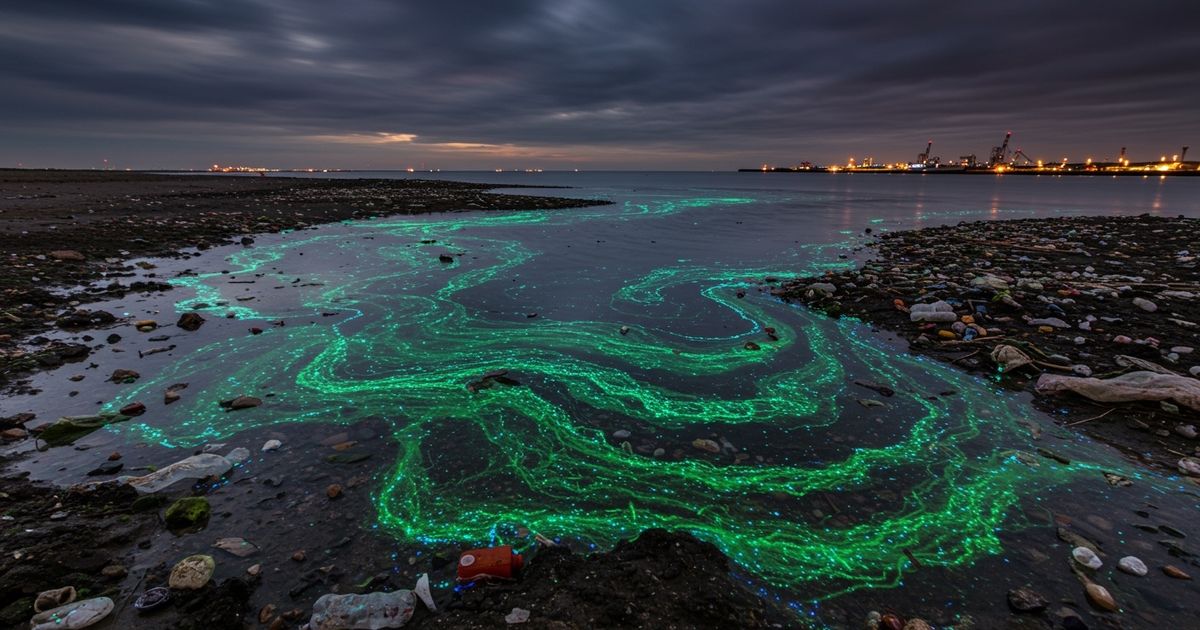
Imagine a world where the biggest environmental villains – massive oil spills, mountains of plastic, and invisible toxic chemicals – could be cleaned up not by giant machines or harsh chemicals, but by an army of microscopic helpers. It sounds like science fiction, but this remarkable future is rapidly becoming a reality, thanks to cutting-edge science.
Background
Our planet is facing an unprecedented pollution crisis. Every year, oil spills devastate marine ecosystems, plastic waste chokes our oceans and landfills, and dangerous chemicals seep into our soil and water, threatening both wildlife and human health. The ways we typically tackle these problems are often expensive, slow, and sometimes create new issues. We use booms to contain oil, dig up contaminated soil, or simply bury trash in massive dumps. These methods often feel like putting a band-aid on a gushing wound.
But nature has its own tiny clean-up crews: microbes. These are microscopic organisms, like bacteria and fungi, that are everywhere around us. Think of them as Earth’s natural recyclers, constantly breaking down dead plants, animals, and waste. They’re the reason a fallen tree eventually returns to the soil, or why food waste in your compost pile disappears.
However, the pollution we create today – especially things like durable plastics and complex industrial chemicals – is often too new, too tough, or too concentrated for natural microbes to handle effectively or quickly enough. This is where human ingenuity steps in, offering a powerful upgrade to nature’s existing tools.
Discovery
Scientists are now taking these natural recyclers and giving them a serious boost using a field called synthetic biology. Think of synthetic biology like rewriting the instruction manual for life. Just as a computer programmer can rewrite code to make a program do something new, synthetic biologists are reprogramming bacteria. They are changing the bacteria’s DNA – its genetic code – to give them brand new abilities, turning them into highly specialized pollution-eaters. It’s like taking a general-purpose tool and turning it into a super-specific, high-performance machine for a particular job.
Let’s dive into how these super-microbes are being engineered to feast on some of our toughest waste:
First, consider oil spills. When an oil tanker spills its cargo, it’s an environmental catastrophe. Naturally, some bacteria in the ocean can slowly munch on crude oil. But they are often too few, and too slow, to make a significant difference in a large spill. Scientists are now engineering new bacteria to be much hungrier and more efficient. They’re giving these microbes extra “molecular tools” – specific enzymes – which are like tiny, super-efficient scissors that can cut apart the complex molecules in oil. This allows the engineered bacteria to break down oil components much faster and more completely than their natural cousins. Imagine deploying a microscopic clean-up crew, each member equipped with specialized gadgets to gobble up oil slicks and convert them into harmless byproducts.
Next, there’s plastic. This is perhaps the most challenging pollution problem. Conventional plastics can take hundreds or even thousands of years to degrade because their molecular structure is incredibly tough. But researchers have made an exciting discovery: some rare bacteria have naturally evolved to eat certain types of plastic. Scientists are now taking the specific genes that give these bacteria their plastic-munching abilities and inserting them into other, more robust bacteria. It’s like taking the blueprint for a specialized plastic shredder and putting it into a more powerful, faster-working factory. These engineered bacteria produce enzymes that can snip apart the long chains of molecules that make up plastic, turning them into smaller, harmless compounds or even reusable building blocks. In other words, they are breaking down plastic waste at a fundamental level, much like a microscopic recycling plant that can decompose materials into their original components.
Finally, think about toxic chemicals. Industrial processes often release dangerous substances, heavy metals like mercury, or persistent pesticides. These contaminants can linger in the environment for decades, poisoning land and water. Synthetic biologists are designing bacteria that can either neutralize these toxins – changing them into something harmless – or even absorb them like tiny sponges. Imagine these bacteria as living chemical filters, grabbing harmful substances from water or soil and transforming them into inert materials. For example, some bacteria are being engineered to convert highly toxic mercury into a less dangerous form, while others are tasked with breaking down stubborn pesticides that resist natural degradation. This offers a way to detoxify polluted sites without invasive digging or using harsh chemical treatments that might just shift the problem elsewhere.
Significance
This isn’t just fascinating lab work; it has profound implications for our planet and our future. Imagine a world where a major oil spill could be significantly mitigated not by massive booms and chemical dispersants, but by millions of targeted, oil-eating microbes working tirelessly at the source of the problem. Consider the plastic crisis: instead of mountains of plastic piling up in landfills or polluting our oceans, these engineered bacteria could help break it down efficiently, potentially even turning it into valuable new materials. This could be a true game-changer for waste management and the circular economy. For areas contaminated with toxic chemicals, these microbes offer a path to cleaner soil and water, reducing risks to human health and ecosystems without invasive, destructive methods.
Basically, this research offers a more sustainable, potentially cheaper, and often more environmentally friendly approach to pollution control. Instead of fighting pollution with more human-made solutions that often have their own drawbacks, we are learning to harness and enhance nature’s own powerful cleaning mechanisms. We’re moving beyond merely cleaning up the mess to actually transforming it.
Outlook
While incredibly promising, this field is still evolving. Scientists are working hard to make these engineered microbes even more efficient, hardy, and, most importantly, safe for use in real-world environments.
One major question is containment: how do we ensure these engineered bacteria stay exactly where they’re needed and don’t spread to places they shouldn’t? Researchers are developing clever genetic “kill switches” – built-in safeguards that can make the bacteria self-destruct if they leave their designated clean-up zone or if their job is done.
Another challenge is scaling up. What works beautifully in a small lab dish needs to be effective in an entire ocean, a vast contaminated field, or a massive industrial waste treatment facility. This requires careful testing and optimization. Public acceptance is also key; open communication about the benefits and safety measures will be crucial as these technologies move closer to widespread use.
Looking ahead, these tiny biological engineers could truly revolutionize how we deal with pollution. They could help us reclaim vast stretches of contaminated land, purify our drinking water, and even turn our plastic waste into valuable resources. The vision is clear: a cleaner, healthier planet, thanks to the smallest, yet most powerful, allies we never knew we had. It’s a future where nature, enhanced by human ingenuity, becomes our greatest environmental champion.